
The importance of energy efficiency as one of the most cost-effective means of providing energy security, increasing economic productivity, reducing air pollution and mitigating greenhouse gas emissions (GHG) was recognised by Nigeria’s Minister of Science, Technology and Innovation, Dr Adeleke Olonmimbe Mamora, when he inaugurated the National Technical Committee for the Scaling Up Energy-Efficient and Climate-Friendly Cooling in Nigeria’s NDC Revision project at a Stakeholder Consultation Workshop held in Abuja on 30 March 2023.
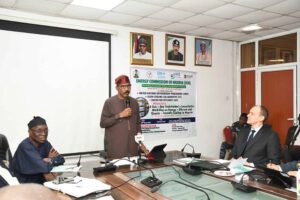 In his address, he called upon the relevant agencies to engage with the project and ensure the enforcement of energy efficiency regulations, and stated, “Nigeria’s growing population, improving lifestyle, and urbanisation, combined with rising global warming, drive demand for cooling devices. However, most air conditioners and refrigerators used in the country are very often sub-optimal in their energy performance. The importance of scaling up energy-efficient and climate-friendly cooling cannot be overemphasized.“
The Scaling Up Energy-Efficient and Climate-Friendly Cooling in Nigeria’s NDC Revision project, supported by funding from the Clean Cooling Collaborative, was launched in February 2022 to address this issue. Its objective is to promote the use of energy-efficient air conditioners with low global warming potential refrigerants in public, residential and commercial buildings and contribute to the target in Nigeria’s Nationally Determined Contribution (NDC) of a 2.5% per year reduction in energy intensity through energy efficiency best practices across all sectors of the nation’s economy. Overall, Nigeria’s NDC includes an unconditional GHG emissions cut of 20% and a conditional reduction of 47% (244 MtC02eq) below the business-as-usual scenario by 2030.
Energy Commission of Nigeria Director-General/CEO, Professor Eli Jidere Bala, put the importance of this project further into context in his welcome remarks explaining that the United Nations Sustainable Development Goal 7 on “ensuring access to affordable, reliable, sustainable and modern energy for all” is anchored on energy efficiency as one of the key pillars. Supporting presentations by representatives from the Federal Ministry of Environment (National Ozone Office and Department of Climate Change), Nigeria Customs Service and the Standards Organization of Nigeria provided further details on how the project will support Nigeria’s National Cooling Action Plan and its customs strategies to strengthen capacity for phasing out the importation of ozone depleting substances, and how the development of robust and sustainable Minimum Energy Performance Standards (MEPS) will underpin the process.
In his address, he called upon the relevant agencies to engage with the project and ensure the enforcement of energy efficiency regulations, and stated, “Nigeria’s growing population, improving lifestyle, and urbanisation, combined with rising global warming, drive demand for cooling devices. However, most air conditioners and refrigerators used in the country are very often sub-optimal in their energy performance. The importance of scaling up energy-efficient and climate-friendly cooling cannot be overemphasized.“
The Scaling Up Energy-Efficient and Climate-Friendly Cooling in Nigeria’s NDC Revision project, supported by funding from the Clean Cooling Collaborative, was launched in February 2022 to address this issue. Its objective is to promote the use of energy-efficient air conditioners with low global warming potential refrigerants in public, residential and commercial buildings and contribute to the target in Nigeria’s Nationally Determined Contribution (NDC) of a 2.5% per year reduction in energy intensity through energy efficiency best practices across all sectors of the nation’s economy. Overall, Nigeria’s NDC includes an unconditional GHG emissions cut of 20% and a conditional reduction of 47% (244 MtC02eq) below the business-as-usual scenario by 2030.
Energy Commission of Nigeria Director-General/CEO, Professor Eli Jidere Bala, put the importance of this project further into context in his welcome remarks explaining that the United Nations Sustainable Development Goal 7 on “ensuring access to affordable, reliable, sustainable and modern energy for all” is anchored on energy efficiency as one of the key pillars. Supporting presentations by representatives from the Federal Ministry of Environment (National Ozone Office and Department of Climate Change), Nigeria Customs Service and the Standards Organization of Nigeria provided further details on how the project will support Nigeria’s National Cooling Action Plan and its customs strategies to strengthen capacity for phasing out the importation of ozone depleting substances, and how the development of robust and sustainable Minimum Energy Performance Standards (MEPS) will underpin the process.
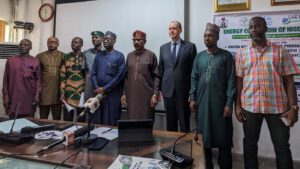 The project is being implemented by the Energy Commission of Nigeria, the United Nations Environment Programme (UNEP) Africa Office and UNEP United for Efficiency (U4E) initiative and is working in close collaboration with a range of key stakeholders. The focus of the Abuja workshop was to provide a forum for these stakeholders to discuss the key components of the project, the implementation strategies and their strategic roles in the entire implementation process, and to inaugurate the National Technical Committee which will provide general guidance on the implementation of the project and facilitate the cooperation of the key stakeholders. The membership of the committee comprised of representatives from:
In his address, he called upon the relevant agencies to engage with the project and ensure the enforcement of energy efficiency regulations, and stated, “Nigeria’s growing population, improving lifestyle, and urbanisation, combined with rising global warming, drive demand for cooling devices. However, most air conditioners and refrigerators used in the country are very often sub-optimal in their energy performance. The importance of scaling up energy-efficient and climate-friendly cooling cannot be overemphasized.“
The Scaling Up Energy-Efficient and Climate-Friendly Cooling in Nigeria’s NDC Revision project, supported by funding from the Clean Cooling Collaborative, was launched in February 2022 to address this issue. Its objective is to promote the use of energy-efficient air conditioners with low global warming potential refrigerants in public, residential and commercial buildings and contribute to the target in Nigeria’s Nationally Determined Contribution (NDC) of a 2.5% per year reduction in energy intensity through energy efficiency best practices across all sectors of the nation’s economy. Overall, Nigeria’s NDC includes an unconditional GHG emissions cut of 20% and a conditional reduction of 47% (244 MtC02eq) below the business-as-usual scenario by 2030.
Energy Commission of Nigeria Director-General/CEO, Professor Eli Jidere Bala, put the importance of this project further into context in his welcome remarks explaining that the United Nations Sustainable Development Goal 7 on “ensuring access to affordable, reliable, sustainable and modern energy for all” is anchored on energy efficiency as one of the key pillars. Supporting presentations by representatives from the Federal Ministry of Environment (National Ozone Office and Department of Climate Change), Nigeria Customs Service and the Standards Organization of Nigeria provided further details on how the project will support Nigeria’s National Cooling Action Plan and its customs strategies to strengthen capacity for phasing out the importation of ozone depleting substances, and how the development of robust and sustainable Minimum Energy Performance Standards (MEPS) will underpin the process.
The project is being implemented by the Energy Commission of Nigeria, the United Nations Environment Programme (UNEP) Africa Office and UNEP United for Efficiency (U4E) initiative and is working in close collaboration with a range of key stakeholders. The focus of the Abuja workshop was to provide a forum for these stakeholders to discuss the key components of the project, the implementation strategies and their strategic roles in the entire implementation process, and to inaugurate the National Technical Committee which will provide general guidance on the implementation of the project and facilitate the cooperation of the key stakeholders. The membership of the committee comprised of representatives from:
- The Energy Commission of Nigeria
- The Standards Organization of Nigeria
- Federal Ministry of Environment – Department Climate Change
- Federal Ministry of Environment – National Ozone Office
- The Nigeria Customs Service
- National Association of Refrigerator and Air Conditioner Practitioners (NARAP)
- National Environmental Standards and Regulations Enforcement (NESREA)
- UNEP
- Conducting a market assessment on air conditioners and leveraging existing data
- Updating air conditioner MEPS and Energy Labels to enhance energy efficiency and address refrigerant global warming potential
- Recommending monitoring, verification and enforcement protocols and providing capacity building to strengthen compliance
- Conducting an awareness campaign on the benefits of energy efficient air conditioners for consumers and on compliance with the standards for vendors
- Recommending cooling targets in the NDC to the Paris Climate Agreement
- Recommending a refrigerant management and disposal scheme