
Between July 29 and August 2, the Gambia Government conducted a study tour to Ghana to enhance the knowledge of Gambian officials on implementing Minimum Energy Performance Standards (MEPS) for air conditioners and refrigerators.
 The study tour was a critical activity under the “National Framework for Leapfrogging to Energy Efficient and Climate Friendly Air Conditioners and Refrigerators in The Gambia” project, financed by the Gambia Government through the Green Climate Fund (GCF). The project seeks to develop an integrated policy strategy that results in a legislative framework for energy-efficient and climate-friendly air conditioners and refrigerators. Improving these appliances’ quality contributes to reducing electricity consumption and greenhouse gas (GHG) emissions.
The Gambian delegation included members of institutions such as the Ministry of Petroleum and Energy, the Ministry of Finance and Economic Affairs (MOFEA), and the National Environment Agency (NEA), The Gambia Standards Bureau (TGSB), Public Utilities Regulatory Authority (PURA), The Gambia Revenue Authority (GRA). Experts from the United for Efficiency (U4E), the project’s executing agency, were also present.
The study tour also included engagements with various Ghanaian institutions involved in the ECOFRIDGES GO programme, which promotes the adoption of energy-efficient and climate-friendly domestic refrigerators and room air conditioners in Ghana. Through this programme, partner local financial institutions have unlocked sufficient financing to support the purchase of thousands of sustainable cooling appliances and the replacement of old existing equipment.
On the first day of activities, the Director of the Renewable Energy, Energy Efficiency and Climate Change of the Ghana Energy Commission (GEC), Mr Kofi Agyarko, gave a presentation on the ECOFRIDGES GO’s main achievements so far:
 The Director also mentioned lessons learned that should be considered for the next steps in implementing MEPs in Ghana, emphasising stakeholder collaboration and effective leadership. Promoting the Green Agenda is also vital for vendor and bank participation.
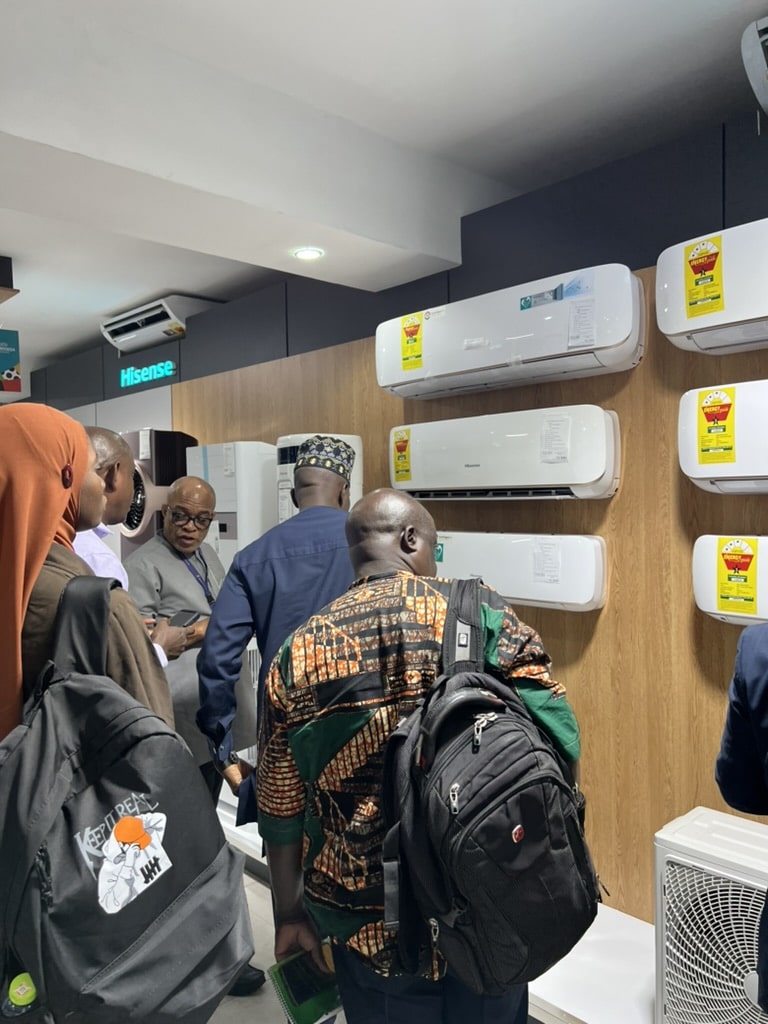
The study tour also included a presentation on the success story of the Ghanaian Cooling Appliances Market Transformation Agenda, a meeting with the Deputy Minister of Energy, Honourable Herbert Krapa, a visit to the Hisense Headquarters, a significant player in Ghana’s appliance market since 2011 and the Ghana Standards Authority (GSA), where they were briefed on the GSA’s role and functions, particularly in developing standards for electrical appliances and testing of air conditioners and refrigerators.
The study tour to the Ghana Energy Commission provided invaluable insights into the successful implementation of Minimum Energy Performance Standards MEPS and related initiatives in Ghana. The comprehensive standards framework, state-of-the-art testing facilities, strong institutional collaboration, and market incentives have collectively contributed to Ghana’s leadership in promoting energy efficiency in West Africa.
“The study tour provided valuable insights to the Gambian delegation, who will be crucial in the development and implementation of MEPS in The Gambia. The Ghana stakeholder provided practical experience and information, simplifying our understanding of MEPS implementation. The hospitality received was overwhelming, and the knowledge collected will be instrumental for the implementation of MEPS in The Gambia”, said Mr Mzwandile Thwala, Energy Efficiency Expert, who represented U4E.
Furthermore, the successful study tour has laid the groundwork for continued cooperation and knowledge sharing between Ghana and The Gambia, paving the way for both countries’ sustainable development and energy efficiency.
 Mr Peter Mendy, Principal Energy Officer at the Ministry of Petroleum and Energy, presented an overview of the study tour and some lessons learned, including the importance of a robust regulatory framework and strict enforcement mechanisms and the benefits of having dedicated testing laboratories to ensure compliance with MEPS.
Following Mr Mendy’s presentation, the workshop participants discussed topics such as the energy consumption of older appliances, which requires a Readiness project to conduct more sensitization activities, and the challenges in increasing energy-efficient appliances. According to participants, the biggest impediment to the proliferation of new energy-efficient electrical appliances in the country is their high purchase cost, necessitating collaboration with financial institutions.
At the end of the workshop, Mr Mendy presented recommendations for the way forward, including developing a robust MEPS roadmap, defining roles for each relevant stakeholder to maximize the project’s potential, and revising the existing MEPS. Finally, the authorities should ensure consistency between MEPS and regulatory frameworks.
For more information about the study tour, please contact Mr Mzwandile Thwala (mzwandile.thwala@un.org).

Participants in the Study Tour
- 1,905 new energy-efficient air conditioners and 2,829 refrigerators sold under the project
- 38,253 MWh total energy savings
- GHS 28.97 million in finance mobilized
- 31,784 tonnes of direct and indirect CO2 reduction
Visit to the Hisense Headquarters
Discussing the tour’s findings
On August 6, a workshop was held to discuss the study tour’s findings. Participants from the Policy Working Group (PWG) and representatives from the Ministry of Finance and Economic Affairs (MOFEA), Ministry of Environment Climate Change and Natural Resources (MECCNAR), Ministry of Gender and Women’s Affairs (MGWA), and other institutions attended the training.
Participants discussing the tour’s findings