
Under the Green Climate Fund (GCF) Readiness Project Rwanda Cooling Initiative: Enabling Deployment of Energy-Efficient and Climate-Friendly Cooling, UNEP’s United for Efficiency (U4E), in partnership with the Rwanda Environment Management Authority (REMA), is supporting the implementation of Rwanda’s regulatory framework for energy-efficient and climate-friendly cooling.
In February 2026, this support translated into two key milestones: a national training on the Product Registration System (PRS) and a regional webinar highlighting Rwanda’s approach to Minimum Energy Performance Standards (MEPS), energy labelling and market surveillance.
Building National Capacity: PRS Training at REMA
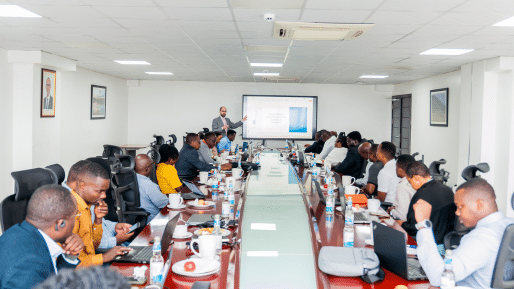
On 24 February, U4E and REMA consultants Victor Minguez and Aime Jean Baptiste Akimana delivered a full-day technical training at REMA headquarters in Kigali to strengthen stakeholders’ capacity to use the newly developed PRS.
The PRS is an online platform developed under the GCF project to operationalise Rwanda’s regulation establishing MEPS and energy labels for air conditioners and domestic refrigerators, which is currently under publication and expected to be issued in the second half of this year. The system enables manufacturers and importers to submit conformity declarations for regulated products, while providing government authorities with the tools necessary for monitoring, verification and enforcement (MVE).
A practical, hands-on approach

The training gathered approximately 40 participants from key public institutions and from the private sector. Attendees included officials from REMA, the Rwanda Inspectorate, Competition and Consumer Protection Authority (RICA), the Rwanda Standards Board (RSB), the Ministry of Infrastructure (MININFRA), the Rwanda Utilities Regulatory Authority (RURA), the Rwanda Revenue Authority and Customs, as well as representatives from Irembo, which hosts Rwanda’s national single-window portal. Manufacturers and importers of cooling products also participated, reflecting the importance of coordinated public––private engagement for effective implementation.
The programme was structured in three interconnected segments. It began with a refresher on the technical regulation, based on the initial training conducted last year, revisiting conformity assessment procedures, documentation requirements, scope definitions, efficiency calculations and applicable test standards for refrigerators and air conditioners. This was followed by a practical session tailored to manufacturers and importers, including live demonstrations of product registration, import request processes and system navigation within the PRS.
The afternoon session focused on government officials, covering advanced aspects such as system configuration, roles and permissions, monitoring and enforcement functions, and the integration of market surveillance mechanisms.
Participants actively engaged throughout the day, raising technical questions about scope interpretation, the treatment of split-system air conditioner components, and specific system functionalities. Their feedback was carefully documented to support further refinement of the PRS, including suggestions regarding request status terminology and enhanced integration with Rwanda’s broader digital single-window system hosted by Irembo.
Sharing Rwanda’s Experience Regionally
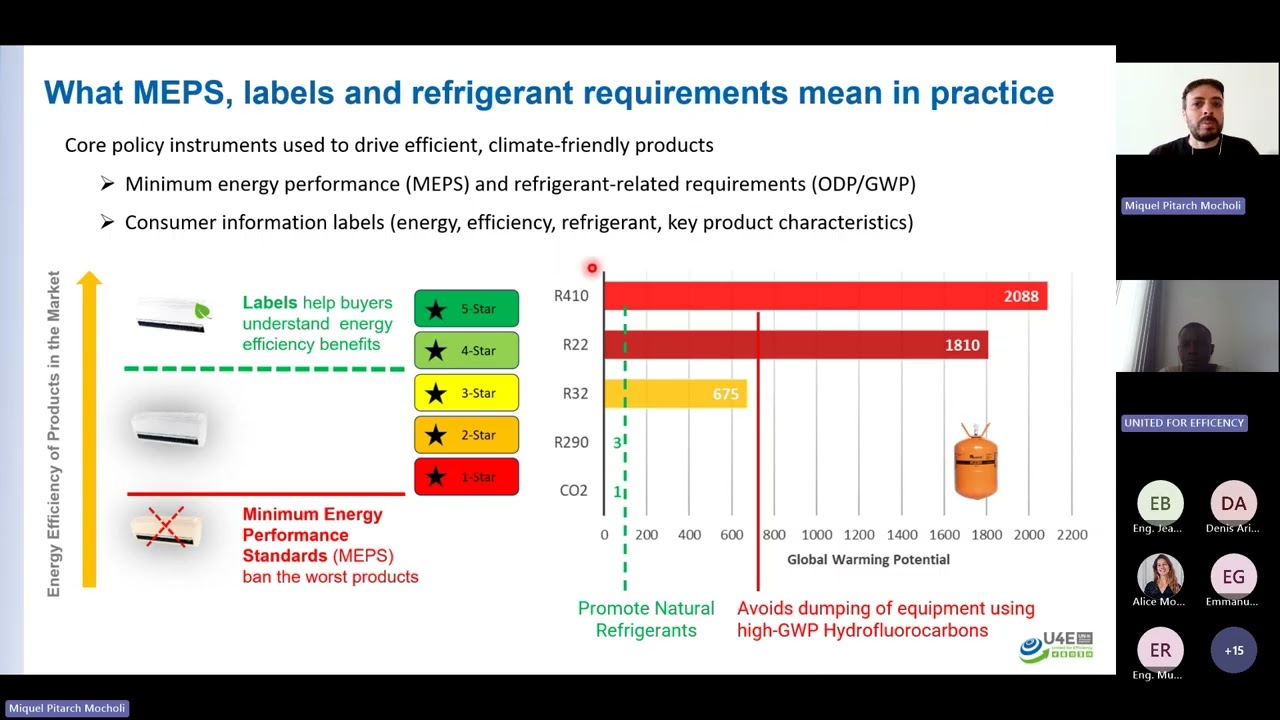
Prior to the in-person training, on 19 February, REMA and U4E hosted an online webinar presenting Rwanda’s regulatory approach to MEPS, labelling, refrigerant-related provisions and market surveillance for cooling products. The webinar highlighted Rwanda’s integrated regulation governing electrical and electronic equipment, which addresses:
- MEPS
- Labelling requirements
- Refrigerant-related provisions
- Conformity assessment procedures
- Conformity assessment, market surveillance and enforcement mechanisms
A particular focus was placed on how Rwanda embedded energy efficiency and climate considerations within a broader regulatory framework, ensuring coordination across institutions and product groups.
The webinar brought together government officials from East African Community (EAC) and Southern African Development Community (SADC) countries, as well as regional organizations and development partners. Rwanda’s experience illustrates how integrated regulation, regional harmonization and digital compliance systems can strengthen the implementation of MEPS, energy labelling and market surveillance frameworks across Africa.
Watch the full webinar recording below:
Advancing Climate-Friendly Cooling in Rwanda
Together, the PRS training and the regional webinar reinforced Rwanda’s leadership in advancing energy-efficient, climate-friendly cooling under the GCF Readiness Project. Through strengthened regulation, digital tools and institutional coordination, Rwanda is building a robust foundation for effective enforcement, reduced emissions and regional knowledge sharing. U4E will continue supporting REMA in finalising and deploying the PRS and strengthening monitoring and verification systems.