
As demand for cooling grows, Liberia is taking steps to ensure that refrigerators and air conditioners entering the market are more energy efficient and use climate-friendly refrigerants. On 29 September, the Government of Liberia, through the Ministry of Mines and Energy (MME) and the Environmental Protection Agency (EPA), UNEP’s United for Efficiency (U4E) initiative and the Climate and Clean Air Coalition (CCAC) officially launched a new project aimed at supporting this transition.
The project, “Integrating Kigali Commitments in NDCs and Capacity Building for Implementing Policies on Refrigerants and Energy Efficiency of Cooling Appliances in Liberia,” will focus on domestic refrigerators and room air conditioners, two products that play an important role in household well-being, business productivity and the country’s electricity demand. The initiative will support Liberia in strengthening its policy and regulatory framework for cooling appliances, building national technical capacity, and creating a stronger platform for collaboration among government institutions, the private sector and other stakeholders.
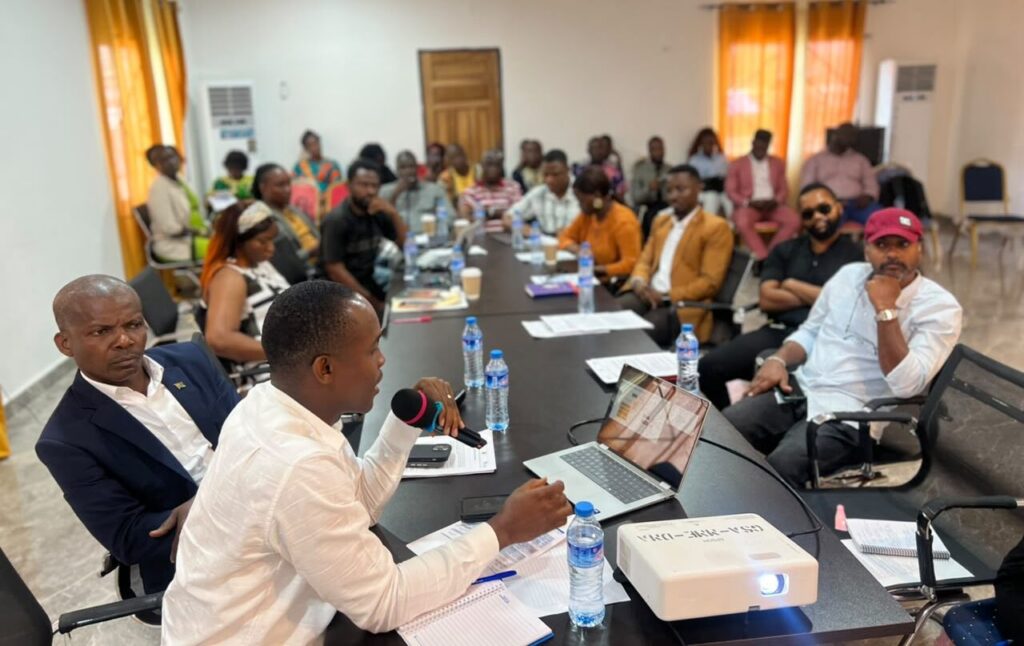
Mr. Nanlee Johnson from the U4E team, delivering a presentation on the Project’s framework.
The project forms part of U4E’s growing engagement across the ECOWAS region. U4E is currently supporting countries including Côte d’Ivoire, Ghana and Nigeria, building on previous work in Senegal and The Gambia. This regional experience provides an opportunity to share knowledge, technical approaches and lessons learned while developing solutions adapted to Liberia’s national circumstances. At the same time, it contributes to broader regional efforts to harmonize the transformation of cooling markets towards more efficient and climate-friendly technologies.
The kick-off meeting brought together more than 20 participants from across the public and private sectors, including importers and distributors such as Razzouk brothers, West African Aircond and LEAP Network; as well as representatives from the Liberia Standards Authority, the Public Procurement and Concessions Commission, the Liberia Refrigeration Union and the Liberian Institute of Statistics and Geo-Information Services (LISGIS). Participants emphasized the importance of accelerating Liberia’s transition towards more energy-efficient and climate-friendly cooling technologies.
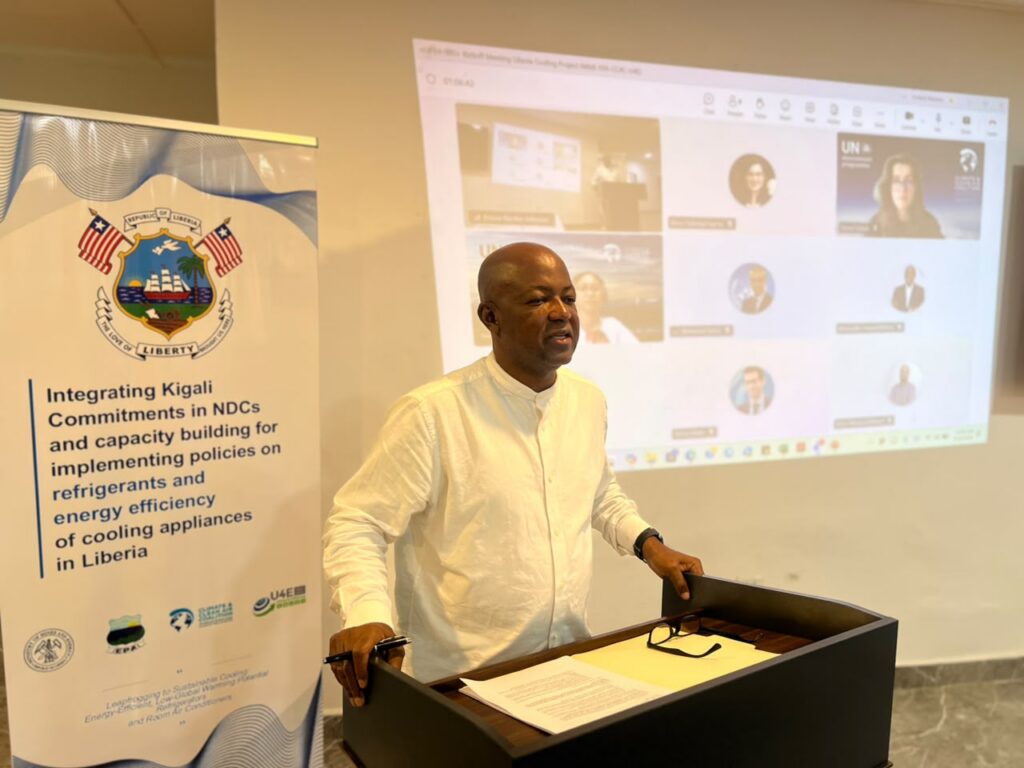
Mr. Ben Karhmoh, UNFCCC focal point and Technical Advisor at the Environmental Protection Agency.
During the launch, Hon. Oliver Gbegbe, Assistant Minister of Energy, reaffirmed the Government of Liberia’s commitment to advancing energy efficiency and integrating Kigali Amendment obligations into national climate strategies. In addition, Mr. Benjamin Karmorh, Chief Technical Advisor and UNFCCC Focal Point of Liberia at the Environmental Protection Agency, highlighted the relevance of the initiative to Liberia’s Nationally Determined Contributions (NDCs) and acknowledged UNEP’s longstanding support, including its role in Liberia’s ratification of the Kigali Amendment.
Finally, Mrs. Joebarline Gbozee, Director of for Energy Planning, Research and Policy at the Ministry of Mines and Energy, presented Liberia’s current energy and environmental policy landscape and highlighted the challenges affecting the cooling sector. These include limited grid coverage and ageing infrastructure, high electricity and appliance costs, limited enforcement of standards and labelling, low awareness of the benefits of efficient technologies, and limited technical capacity for testing and compliance.

Mrs. Joebarline Gbozee, Director of Energy Planning, Research and Policy at the Ministry of Mines and Energy.
A key first step following the project launch will be to understand Liberia’s cooling market. U4E and its national partners will undertake a market assessment of domestic refrigerators and room air conditioners, gathering data on the products available on the market as well as the policy and regulatory context. This evidence will support the refinement of the most appropriate policy measures for Liberia, including Minimum Energy Performance Standards (MEPS), energy labelling requirements and other measures to support the transition towards lower-GWP refrigerants. The assessment will also provide a baseline against which the impact of future policies can be measured.
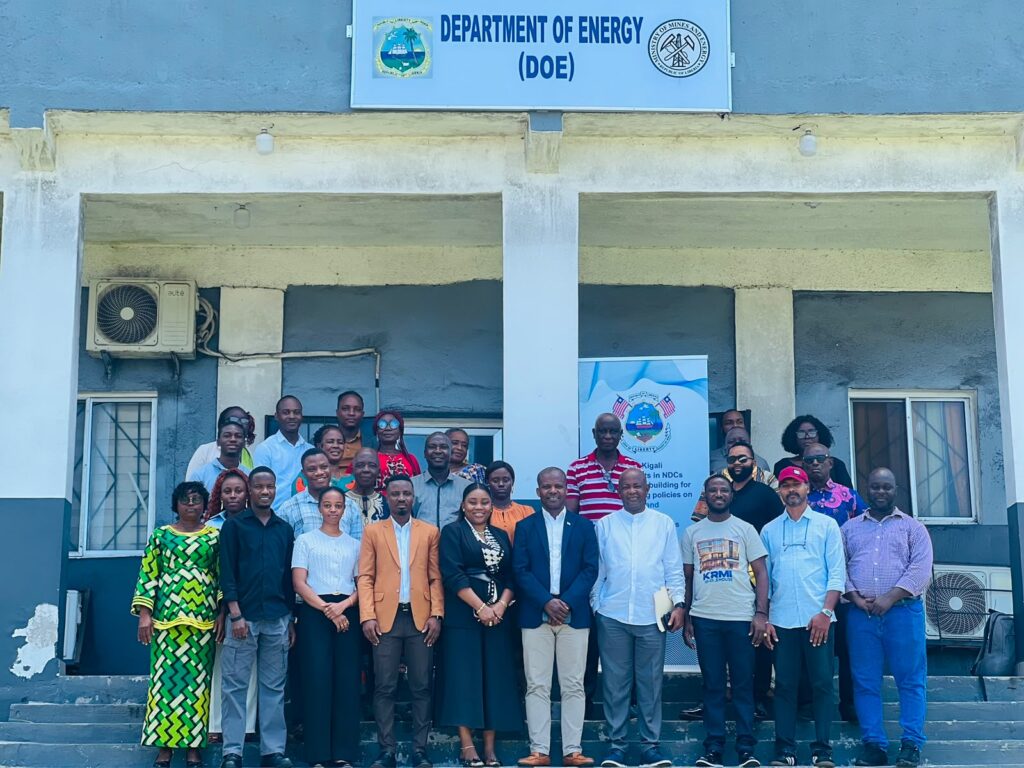
Group photo at the Ministry of Mines and Energy facilities.
As stakeholder engagement will be central to this process, the project will establish a Policy Working Group to bring together relevant national institutions and stakeholders, providing a platform for consultation, technical input and coordination throughout implementation.
The work ahead will lay the foundations for a stronger policy and regulatory framework for cooling in Liberia: one that can support lower energy consumption, reduce emissions and help consumers and businesses access more efficient and climate-friendly technologies.
For more information on U4E’s work in Liberia, contact: Soledad Garcia (soledad.garcia@un.org)