
*This is a United for Efficiency Partner Story and was originally published on the SEforALL website
 NEW YORK, July 16, 2018: Sustainable Energy for All (SEforALL) today released Chilling Prospects:
Providing Sustainable Cooling for All – the first ever report to quantify the growing risks and assess the
opportunities of the global cooling challenge.
The report shows there are over 1.1 billion people globally who face immediate risks from lack of access to cooling. Cooling underpins the ability of millions to escape poverty, to keep our children healthy, vaccines stable, food nutritious, and our economies productive. Access to cooling is now a fundamental issue of equity, and as temperatures hit record levels, this could also mean the difference between life or death for some.
These risks are both a development and climate change issue, as they pose challenges for the health, safety, and productivity of populations across the world – especially countries in Asia and Africa where access gaps are the largest. Yet this challenge also offers business and entrepreneurs the opportunity of major new consumer markets which want super-efficient, affordable technologies to meet their cooling needs.
“In a world facing continuously rising temperatures, access to cooling is not a luxury – it’s essential for everyday life. It guarantees safe cold supply chains for fresh produce, safe storage of life-saving vaccines, and safe work and housing conditions,” said Rachel Kyte, CEO and Special Representative to the United Nations Secretary-General for Sustainable Energy for All.
“This Chilling Prospects report is a wake-up call. We must meet these needs in an energy efficient way, and without using ozone damaging substances. If not, the risks to life, health and the planet are significant. But there are equally important business opportunities for those that face up to the challenge and act early.”
Closing these cooling access gaps is essential for economic growth and development for many countries, and especially vulnerable populations. Key findings based on an analysis of 52 vulnerable countries in hot climates include:
NEW YORK, July 16, 2018: Sustainable Energy for All (SEforALL) today released Chilling Prospects:
Providing Sustainable Cooling for All – the first ever report to quantify the growing risks and assess the
opportunities of the global cooling challenge.
The report shows there are over 1.1 billion people globally who face immediate risks from lack of access to cooling. Cooling underpins the ability of millions to escape poverty, to keep our children healthy, vaccines stable, food nutritious, and our economies productive. Access to cooling is now a fundamental issue of equity, and as temperatures hit record levels, this could also mean the difference between life or death for some.
These risks are both a development and climate change issue, as they pose challenges for the health, safety, and productivity of populations across the world – especially countries in Asia and Africa where access gaps are the largest. Yet this challenge also offers business and entrepreneurs the opportunity of major new consumer markets which want super-efficient, affordable technologies to meet their cooling needs.
“In a world facing continuously rising temperatures, access to cooling is not a luxury – it’s essential for everyday life. It guarantees safe cold supply chains for fresh produce, safe storage of life-saving vaccines, and safe work and housing conditions,” said Rachel Kyte, CEO and Special Representative to the United Nations Secretary-General for Sustainable Energy for All.
“This Chilling Prospects report is a wake-up call. We must meet these needs in an energy efficient way, and without using ozone damaging substances. If not, the risks to life, health and the planet are significant. But there are equally important business opportunities for those that face up to the challenge and act early.”
Closing these cooling access gaps is essential for economic growth and development for many countries, and especially vulnerable populations. Key findings based on an analysis of 52 vulnerable countries in hot climates include:
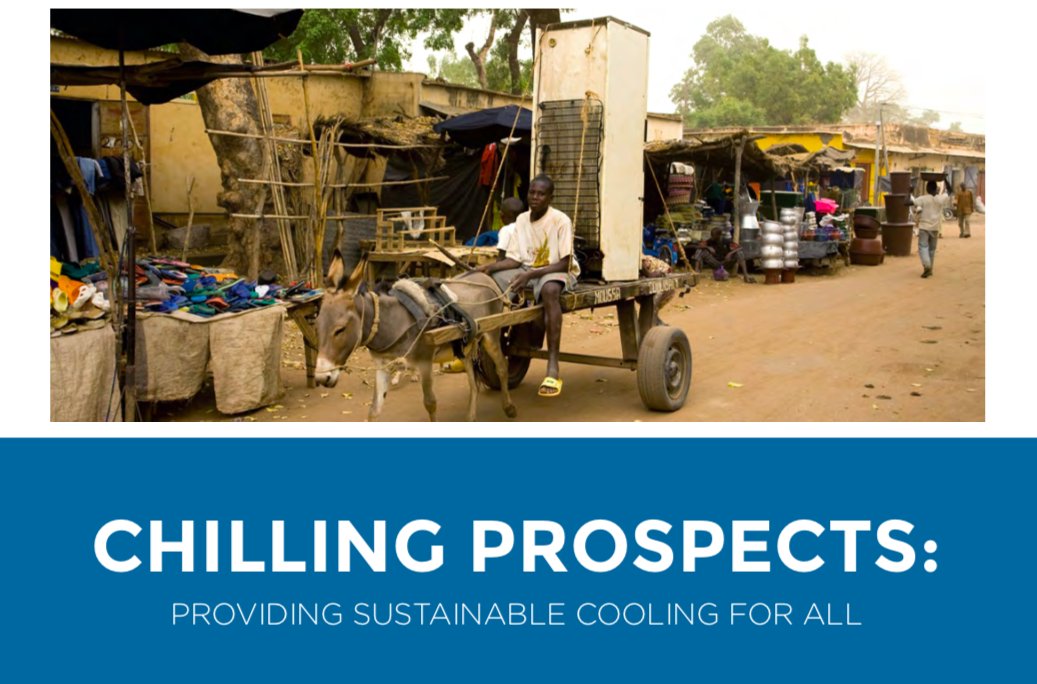 NEW YORK, July 16, 2018: Sustainable Energy for All (SEforALL) today released Chilling Prospects:
Providing Sustainable Cooling for All – the first ever report to quantify the growing risks and assess the
opportunities of the global cooling challenge.
The report shows there are over 1.1 billion people globally who face immediate risks from lack of access to cooling. Cooling underpins the ability of millions to escape poverty, to keep our children healthy, vaccines stable, food nutritious, and our economies productive. Access to cooling is now a fundamental issue of equity, and as temperatures hit record levels, this could also mean the difference between life or death for some.
These risks are both a development and climate change issue, as they pose challenges for the health, safety, and productivity of populations across the world – especially countries in Asia and Africa where access gaps are the largest. Yet this challenge also offers business and entrepreneurs the opportunity of major new consumer markets which want super-efficient, affordable technologies to meet their cooling needs.
“In a world facing continuously rising temperatures, access to cooling is not a luxury – it’s essential for everyday life. It guarantees safe cold supply chains for fresh produce, safe storage of life-saving vaccines, and safe work and housing conditions,” said Rachel Kyte, CEO and Special Representative to the United Nations Secretary-General for Sustainable Energy for All.
“This Chilling Prospects report is a wake-up call. We must meet these needs in an energy efficient way, and without using ozone damaging substances. If not, the risks to life, health and the planet are significant. But there are equally important business opportunities for those that face up to the challenge and act early.”
Closing these cooling access gaps is essential for economic growth and development for many countries, and especially vulnerable populations. Key findings based on an analysis of 52 vulnerable countries in hot climates include:
NEW YORK, July 16, 2018: Sustainable Energy for All (SEforALL) today released Chilling Prospects:
Providing Sustainable Cooling for All – the first ever report to quantify the growing risks and assess the
opportunities of the global cooling challenge.
The report shows there are over 1.1 billion people globally who face immediate risks from lack of access to cooling. Cooling underpins the ability of millions to escape poverty, to keep our children healthy, vaccines stable, food nutritious, and our economies productive. Access to cooling is now a fundamental issue of equity, and as temperatures hit record levels, this could also mean the difference between life or death for some.
These risks are both a development and climate change issue, as they pose challenges for the health, safety, and productivity of populations across the world – especially countries in Asia and Africa where access gaps are the largest. Yet this challenge also offers business and entrepreneurs the opportunity of major new consumer markets which want super-efficient, affordable technologies to meet their cooling needs.
“In a world facing continuously rising temperatures, access to cooling is not a luxury – it’s essential for everyday life. It guarantees safe cold supply chains for fresh produce, safe storage of life-saving vaccines, and safe work and housing conditions,” said Rachel Kyte, CEO and Special Representative to the United Nations Secretary-General for Sustainable Energy for All.
“This Chilling Prospects report is a wake-up call. We must meet these needs in an energy efficient way, and without using ozone damaging substances. If not, the risks to life, health and the planet are significant. But there are equally important business opportunities for those that face up to the challenge and act early.”
Closing these cooling access gaps is essential for economic growth and development for many countries, and especially vulnerable populations. Key findings based on an analysis of 52 vulnerable countries in hot climates include:
- 1.1 billion people face cooling access risks, including:
- 470 million people in poor rural areas without access to safe food and medicines
- 630 million people in hotter, poor urban slums with little or no cooling to protect them against extreme heatwaves
- Nine countries have the biggest populations facing significant cooling risks. These countries across Asia, Africa and Latin America include: India, Bangladesh, Brazil, Pakistan, Nigeria, Indonesia, China, Mozambique and Sudan.
- 2.3 billion people represent a different kind of cooling risk – a growing middle class, where limited purchasing options mean they may only be able to afford to buy less expensive and less efficient cooling devices, which could spike global energy demand with profound climate impacts.
- Government policymakers should immediately measure gaps in access to cooling in their own countries, as an evidence base for more proactive and integratedpolicy-making.
- Businesses, governments and finance actors should collaborate to assess and act on the enormous commercial and economic opportunities, including productivity, employment and growth gains from providing sustainable cooling solutions for all.
- Manufacturers, industry associations and lenders should actively engage and cooperate develop products and financial solutions that meet the needs of those without access cooling.
- All stakeholders should accelerate their innovation efforts and embrace a paradigm shift – thinking more holistically about the way we provide cooling, focusing firstly on reducing heat loads and then about how deliver cooling affordably andsustainably.