
In November 2022, representatives from the key stakeholder organisations involved in monitoring, verification and enforcement activities in Indonesia spent four days at the Electrical and Electronics Institute (EEI) in Bangkok, Thailand to reinforce and develop the national capabilities for undertaking the testing required to underpin regulations for energy efficiency of lighting products in Indonesia.
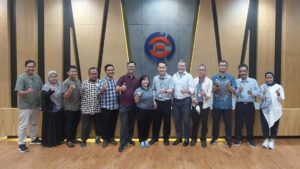 The technical study tour was undertaken as part of the GEF-funded Advancing Indonesia’s Lighting Market to High Efficient Technologies (ADLIGHT) project, which aims to reduce electricity demand and related greenhouse gas (GHG) emissions by promoting increased use of high efficiency lighting technologies by transformation of the national market.
It was conducted between 22-25 November 2022 and included photometric testing laboratory staff and relevant administrative, regulatory and compliance staff from five key stakeholder organisations:
The technical study tour was undertaken as part of the GEF-funded Advancing Indonesia’s Lighting Market to High Efficient Technologies (ADLIGHT) project, which aims to reduce electricity demand and related greenhouse gas (GHG) emissions by promoting increased use of high efficiency lighting technologies by transformation of the national market.
It was conducted between 22-25 November 2022 and included photometric testing laboratory staff and relevant administrative, regulatory and compliance staff from five key stakeholder organisations:
 To complement the technical study tour and ensure preparedness amongst the participants, two virtual training sessions were conducted by United Nations Environment Programme United for Efficiency International Lighting experts Steve Coyne and Gillian Isoardi. The sessions were open to all stakeholders and witnessed participation of 50 stakeholders primarily from the laboratories and manufacturing associations.
The first virtual session, on the fundamentals of photometry and colorimetry, was held on 3 November 2022 and discussed the quantities, parameters and instrumentation required for MEPS assessment. It provided a solid foundation for the technical study tour programme to build on and ensured that all participants had the same minimum level of understanding prior to the visit.
The second virtual session was held on 15 November 2022 and provided an overview of international photometry and colorimetry test standards and measurement uncertainty calculations. This provided a glimpse of the sophisticated testing apparatus to not just the participants who would attend the training at EEI but also to the wider stakeholder group.
Prior to visiting EEI, each participating laboratory in Indonesia (with current photometric, colorimetric and electrical measurement capability) was asked to undertake measurement of specific artefacts which then accompanied the participant to EEI where they underwent comparison testing. The lighting products provided by the laboratories were two non-directional lamps, one directional lamp and one small floodlight. The testing was carried out using an integrating sphere system, testing the lighting product as per CIE S 025, Test Method for LED Lamps, LED Luminaires and LED Modules and its Supplement, for:
To complement the technical study tour and ensure preparedness amongst the participants, two virtual training sessions were conducted by United Nations Environment Programme United for Efficiency International Lighting experts Steve Coyne and Gillian Isoardi. The sessions were open to all stakeholders and witnessed participation of 50 stakeholders primarily from the laboratories and manufacturing associations.
The first virtual session, on the fundamentals of photometry and colorimetry, was held on 3 November 2022 and discussed the quantities, parameters and instrumentation required for MEPS assessment. It provided a solid foundation for the technical study tour programme to build on and ensured that all participants had the same minimum level of understanding prior to the visit.
The second virtual session was held on 15 November 2022 and provided an overview of international photometry and colorimetry test standards and measurement uncertainty calculations. This provided a glimpse of the sophisticated testing apparatus to not just the participants who would attend the training at EEI but also to the wider stakeholder group.
Prior to visiting EEI, each participating laboratory in Indonesia (with current photometric, colorimetric and electrical measurement capability) was asked to undertake measurement of specific artefacts which then accompanied the participant to EEI where they underwent comparison testing. The lighting products provided by the laboratories were two non-directional lamps, one directional lamp and one small floodlight. The testing was carried out using an integrating sphere system, testing the lighting product as per CIE S 025, Test Method for LED Lamps, LED Luminaires and LED Modules and its Supplement, for:
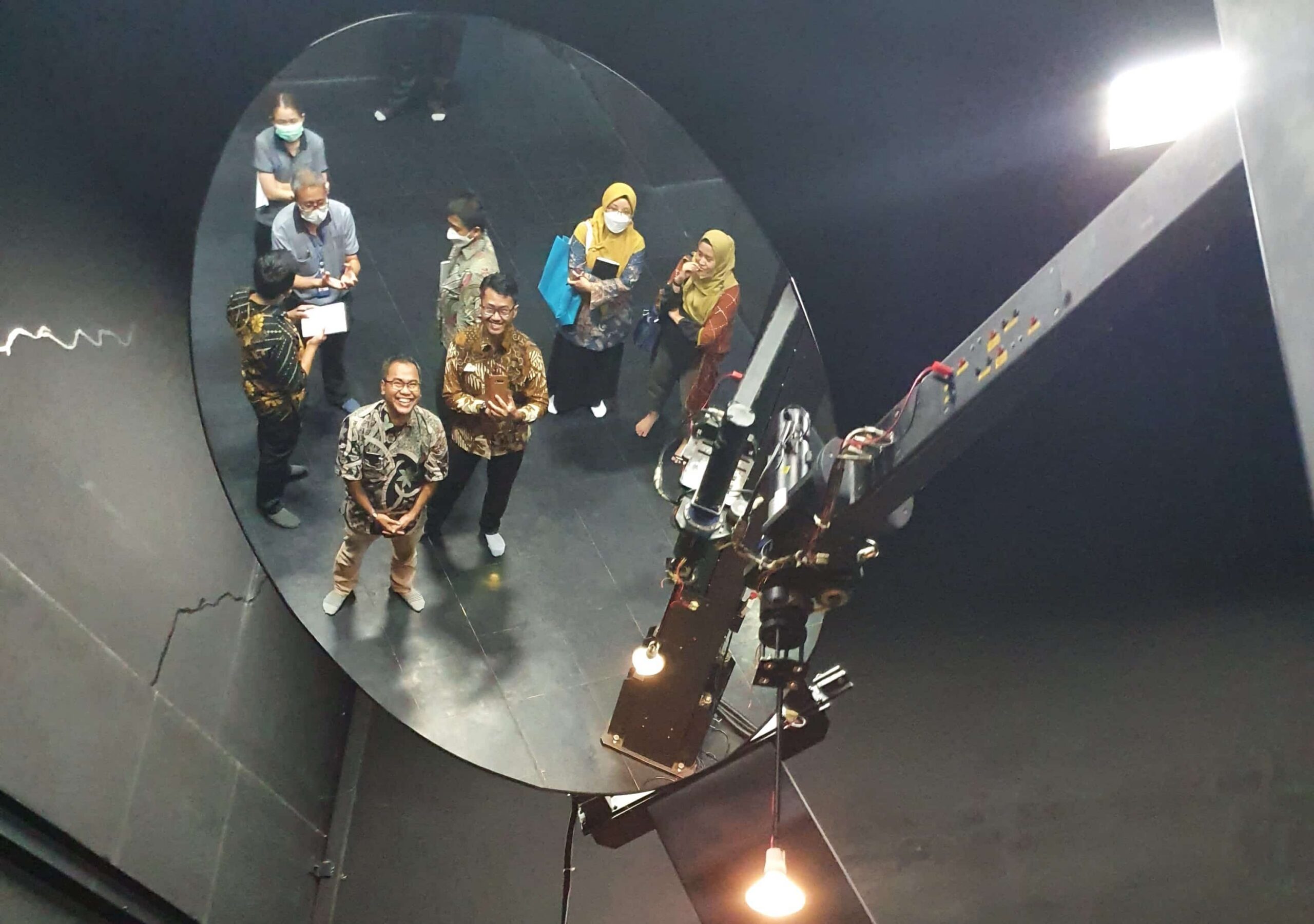 The following days of the training included observing the operation of various integrating spheres and goniophotometer systems (both near and far-field) and the practices of the EEI technicians while conducting the tests. Several hands-on sessions were included which allowed the participants to be directly involved in the testing. The final day of the visit was devoted to laboratory housekeeping and to compare the results of the artefacts which were tested and brought from Indonesia as part of the inter-laboratory comparison activity. Despite some marginal variations, the comparison test results showed that the testing carried out by the laboratories in Indonesia has a good level of accuracy.
Summarising the technical study tour and supporting activities, Mr. Supriyadi (Deputy Director for the Energy Conservation Technology Development, Ministry of Energy and Mineral Resources) stated, “This training provided a lot of knowledge related to the implementation of LED light testing for test laboratories in Indonesia. Personnel directly involved in testing become more familiar with the process and substance of LED light testing. Various things that have remained as questions when conducting lamp testing practices have been answered through this training with explanations given by experts. Trainees also gained new perspectives in terms of best practices in lamp testing. Overall, the training activity has proven to be crucial to support the implementation of minimum energy performance standards for LED lights in Indonesia which will become mandatory starting from July 2023.”
For more information on ADLIGHT, contact Saikiran Kasamsetty at saikiran.kasamsetty@un.org or click here to visit the Indonesia page on the U4E website.
The following days of the training included observing the operation of various integrating spheres and goniophotometer systems (both near and far-field) and the practices of the EEI technicians while conducting the tests. Several hands-on sessions were included which allowed the participants to be directly involved in the testing. The final day of the visit was devoted to laboratory housekeeping and to compare the results of the artefacts which were tested and brought from Indonesia as part of the inter-laboratory comparison activity. Despite some marginal variations, the comparison test results showed that the testing carried out by the laboratories in Indonesia has a good level of accuracy.
Summarising the technical study tour and supporting activities, Mr. Supriyadi (Deputy Director for the Energy Conservation Technology Development, Ministry of Energy and Mineral Resources) stated, “This training provided a lot of knowledge related to the implementation of LED light testing for test laboratories in Indonesia. Personnel directly involved in testing become more familiar with the process and substance of LED light testing. Various things that have remained as questions when conducting lamp testing practices have been answered through this training with explanations given by experts. Trainees also gained new perspectives in terms of best practices in lamp testing. Overall, the training activity has proven to be crucial to support the implementation of minimum energy performance standards for LED lights in Indonesia which will become mandatory starting from July 2023.”
For more information on ADLIGHT, contact Saikiran Kasamsetty at saikiran.kasamsetty@un.org or click here to visit the Indonesia page on the U4E website.
The technical study tour was undertaken as part of the GEF-funded Advancing Indonesia’s Lighting Market to High Efficient Technologies (ADLIGHT) project, which aims to reduce electricity demand and related greenhouse gas (GHG) emissions by promoting increased use of high efficiency lighting technologies by transformation of the national market.
It was conducted between 22-25 November 2022 and included photometric testing laboratory staff and relevant administrative, regulatory and compliance staff from five key stakeholder organisations:
- Directorate of Energy Conservation, Ministry of Energy and Mineral Resources
- Center (Laboratory) for Standardization and Industrial Services (Surabaya), Ministry of Industry
- Laboratory for Quality Testing of Goods, Ministry of Trade
- Test Laboratory of PT. Sucofindo (State-owned Enterprise)
- Test Laboratory PT. Qualis (Commercial/Private)
- Demonstrations on in-house calibration of reference items and laboratory equipment
- Observing various test methods for measurement of lamps and luminaires (including demonstration of incompatibility between reference lamp and test lamp types)
- Conducting an interlaboratory comparison of test results from measurement of photometric, electrical, and colorimetric quantities of selected LED artefacts from participating Indonesian laboratories with the host test facility)
- Instruction and demonstration of measurement uncertainties
- Presentations on topics of in-house operational maintenance, monitoring, and undertaking remedial actions
To complement the technical study tour and ensure preparedness amongst the participants, two virtual training sessions were conducted by United Nations Environment Programme United for Efficiency International Lighting experts Steve Coyne and Gillian Isoardi. The sessions were open to all stakeholders and witnessed participation of 50 stakeholders primarily from the laboratories and manufacturing associations.
The first virtual session, on the fundamentals of photometry and colorimetry, was held on 3 November 2022 and discussed the quantities, parameters and instrumentation required for MEPS assessment. It provided a solid foundation for the technical study tour programme to build on and ensured that all participants had the same minimum level of understanding prior to the visit.
The second virtual session was held on 15 November 2022 and provided an overview of international photometry and colorimetry test standards and measurement uncertainty calculations. This provided a glimpse of the sophisticated testing apparatus to not just the participants who would attend the training at EEI but also to the wider stakeholder group.
Prior to visiting EEI, each participating laboratory in Indonesia (with current photometric, colorimetric and electrical measurement capability) was asked to undertake measurement of specific artefacts which then accompanied the participant to EEI where they underwent comparison testing. The lighting products provided by the laboratories were two non-directional lamps, one directional lamp and one small floodlight. The testing was carried out using an integrating sphere system, testing the lighting product as per CIE S 025, Test Method for LED Lamps, LED Luminaires and LED Modules and its Supplement, for:
- Total luminous flux
- Current, voltage and true power
- Colour quantities of CCT, CRI, and chromaticity coordinates
- Power factor
The following days of the training included observing the operation of various integrating spheres and goniophotometer systems (both near and far-field) and the practices of the EEI technicians while conducting the tests. Several hands-on sessions were included which allowed the participants to be directly involved in the testing. The final day of the visit was devoted to laboratory housekeeping and to compare the results of the artefacts which were tested and brought from Indonesia as part of the inter-laboratory comparison activity. Despite some marginal variations, the comparison test results showed that the testing carried out by the laboratories in Indonesia has a good level of accuracy.
Summarising the technical study tour and supporting activities, Mr. Supriyadi (Deputy Director for the Energy Conservation Technology Development, Ministry of Energy and Mineral Resources) stated, “This training provided a lot of knowledge related to the implementation of LED light testing for test laboratories in Indonesia. Personnel directly involved in testing become more familiar with the process and substance of LED light testing. Various things that have remained as questions when conducting lamp testing practices have been answered through this training with explanations given by experts. Trainees also gained new perspectives in terms of best practices in lamp testing. Overall, the training activity has proven to be crucial to support the implementation of minimum energy performance standards for LED lights in Indonesia which will become mandatory starting from July 2023.”
For more information on ADLIGHT, contact Saikiran Kasamsetty at saikiran.kasamsetty@un.org or click here to visit the Indonesia page on the U4E website.