
In October 2020, Bolivia’s Ministry of Energies and Ministry of Environment and Water formally announced the start of activities on their Delivering the Transition to Energy Efficient Lighting project. Working with the United Nations Environment Programme United for Efficiency (UNEP U4E) initiative, with financial support from the Global Environment Facility, the objective of the project is to accelerate the transition to energy-efficient lighting technologies in Bolivia through the development of a national efficient lighting policy and practical innovative interventions that will ensure success of the transition.
 By the year 2030, on the basis of the its country saving assessment for Bolivia, U4E estimates that a transition to energy-efficient lighting will result in annual direct energy savings of 1.5 TWh, cost savings of over $160 million USD and a reduction of 1.1 million tonnes of CO2.
The project builds on the success of the previous National Energy Efficiency Program which, between mid-2008 to mid-2015, distributed around 7.5 million CFLs (18 W) to 1.5 million Bolivian households to replace inefficient incandescent bulbs, and awareness campaigns for the rational use of electricity, such as “Move your electricity consumption off-peak” and “If you turn the light off, you won’t pay for it.”
However, in the absence of mandatory energy labelling and standards and monitoring, verification, and enforcement mechanisms in Bolivia for lighting products at the time, the significant energy savings and peak load demand reductions achieved by these activities where not accompanied by a sustained transition to more efficient lighting products.
This new, three-year, $13.5 million USD project will therefore address these barriers through:
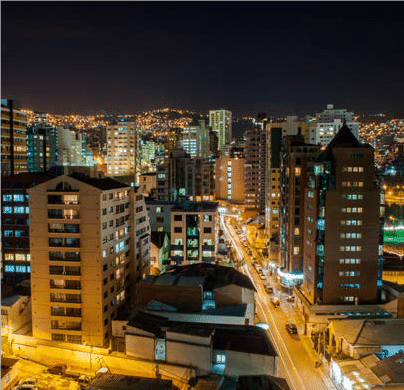 By the year 2030, on the basis of the its country saving assessment for Bolivia, U4E estimates that a transition to energy-efficient lighting will result in annual direct energy savings of 1.5 TWh, cost savings of over $160 million USD and a reduction of 1.1 million tonnes of CO2.
The project builds on the success of the previous National Energy Efficiency Program which, between mid-2008 to mid-2015, distributed around 7.5 million CFLs (18 W) to 1.5 million Bolivian households to replace inefficient incandescent bulbs, and awareness campaigns for the rational use of electricity, such as “Move your electricity consumption off-peak” and “If you turn the light off, you won’t pay for it.”
However, in the absence of mandatory energy labelling and standards and monitoring, verification, and enforcement mechanisms in Bolivia for lighting products at the time, the significant energy savings and peak load demand reductions achieved by these activities where not accompanied by a sustained transition to more efficient lighting products.
This new, three-year, $13.5 million USD project will therefore address these barriers through:
- Development of national policy and regulations to promote the rapid transition to efficient lighting
- Creation of monitoring, verification and enforcement (MVE) capacities to ensure effective transition to efficient lighting
- Ensuring environmentally sound management for a sustainable transition to efficient lighting
- Lighting innovation to accelerate the use of efficient lighting, in particular light emitting diodes (LEDs) and controls