
The first Global Cooling Pledge Signatories Focal Points Meeting took place in Bonn, Germany, on 13–14 June 2025. Organised by the Cool Coalition, with support from UNEP and partner governments, the event brought together national focal points to exchange experiences, build capacity, and strengthen coordination around the implementation of the Cooling Pledge—a global commitment launched at COP28 to reduce cooling-related emissions by 68% by 2050, while ensuring equitable access to sustainable cooling solutions.
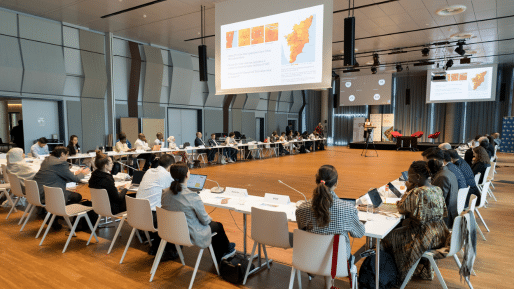 The training sessions covered a range of cooling-related topics, including passive cooling strategies, cold chain development, financial mechanisms, and energy efficiency (EE). Many countries shared updates on their National Cooling Action Plans (NCAPs) and other relevant national initiatives.
The meeting also marked important institutional progress for the Cooling Pledge, including the endorsement of Terms of Reference for the new Intergovernmental Committee on Cooling and the Cool Champions Group, which will provide oversight and visibility to implementation. In addition, UNEP, together with Brazil and Italy, announced the launch of the EPIC Facility (Enabling Pledge Implementation for Cooling), a new support mechanism backed by €2 million in funding to deliver technical assistance and financing for national and city-level sustainable cooling initiatives.
 The training sessions covered a range of cooling-related topics, including passive cooling strategies, cold chain development, financial mechanisms, and energy efficiency (EE). Many countries shared updates on their National Cooling Action Plans (NCAPs) and other relevant national initiatives.
The meeting also marked important institutional progress for the Cooling Pledge, including the endorsement of Terms of Reference for the new Intergovernmental Committee on Cooling and the Cool Champions Group, which will provide oversight and visibility to implementation. In addition, UNEP, together with Brazil and Italy, announced the launch of the EPIC Facility (Enabling Pledge Implementation for Cooling), a new support mechanism backed by €2 million in funding to deliver technical assistance and financing for national and city-level sustainable cooling initiatives.
Showcasing Energy Efficiency as a Pillar of the Cooling Pledge
Among the technical sessions, UNEP’s United for Efficiency (U4E) initiative presented a dedicated technical discussion on energy efficiency in the cooling sector, highlighting the importance of regulatory frameworks and tools to accelerate the transition to efficient, climate-friendly cooling appliances.
The session on energy efficiency highlighted the pivotal role of EE interventions in achieving the Cooling Pledge’s goals. Four of the Pledge’s ten commitments relate directly to EE, including the adoption of Minimum Energy Performance Standards (MEPS) aligned with the Model Regulations, the development of sustainable procurement (SPP) policies, and support through the Montreal Protocol’s Multilateral Fund.

- MEPS, through the Model Regulations Guidelines, to push markets toward higher-performing products
- Energy Labels schemes to provide powerful tools to end users to make an informed purchase decision
- Sustainable Procurement Guidelines, with high ambition technical specifications to leverage government purchasing power
- Product Registration Systems (PRS) to enhance compliance and market transparency