As heatwaves intensify and cities grow, countries are urgently seeking ways to provide cooling that protects people without increasing emissions. At COP30, the session “Efficient Cooling and Ventilation for Comfort and Decarbonization” brought together global leaders to explore how efficient technologies, robust policies, and regional collaboration can reshape one of the world’s fastest-growing energy demand sectors. The discussion underscored a clear message: sustainable cooling is now essential for resilience, affordability, and climate action.
Held on 19 November at the Buildings and Cooling Pavilion, the event was co-organized by Daikin, UNEP-United for Efficiency (U4E), and the GlobalABC, with the participation of the International Energy Agency (IEA), the Cool Coalition, the Government of Nigeria, the ASEAN Centre for Energy, Metrus Energy, and The Energy Resources Institute (TERI)
Opening Remarks: A Call for Scalable, Sustainable Cooling
Hongpeng Lei, Chief of UNEP’s Mitigation Branch, opened the session by highlighting the critical role of sustainable cooling in climate mitigation efforts. He emphasised U4E’s work to support countries in transitioning to efficient, climate-friendly solutions, especially as cooling demand accelerates due to population growth and rising temperatures.
Keynote: Nigeria’s Vision for Cooling Policy Leadership
Mustapha Abdullah, Director-General of the Energy Commission of Nigeria, delivered the keynote address, outlining the challenges emerging economies face with fast-rising air-conditioning demand. He emphasised the importance of national policies such as Minimum Energy Performance Standards (MEPS) and the need to scale up efficient air conditioners to ease grid pressure, cut emissions, and support national climate targets.
Technology and Policy Insights from Industry and International Agencies
Takahiro Asahi of Daikin Industries presented the role of energy-efficient technologies, including inverter air conditioners and energy recovery ventilators, in reducing excess cooling and improving indoor comfort. He highlighted examples from global markets and underscored the importance of regulations in driving technological uptake.
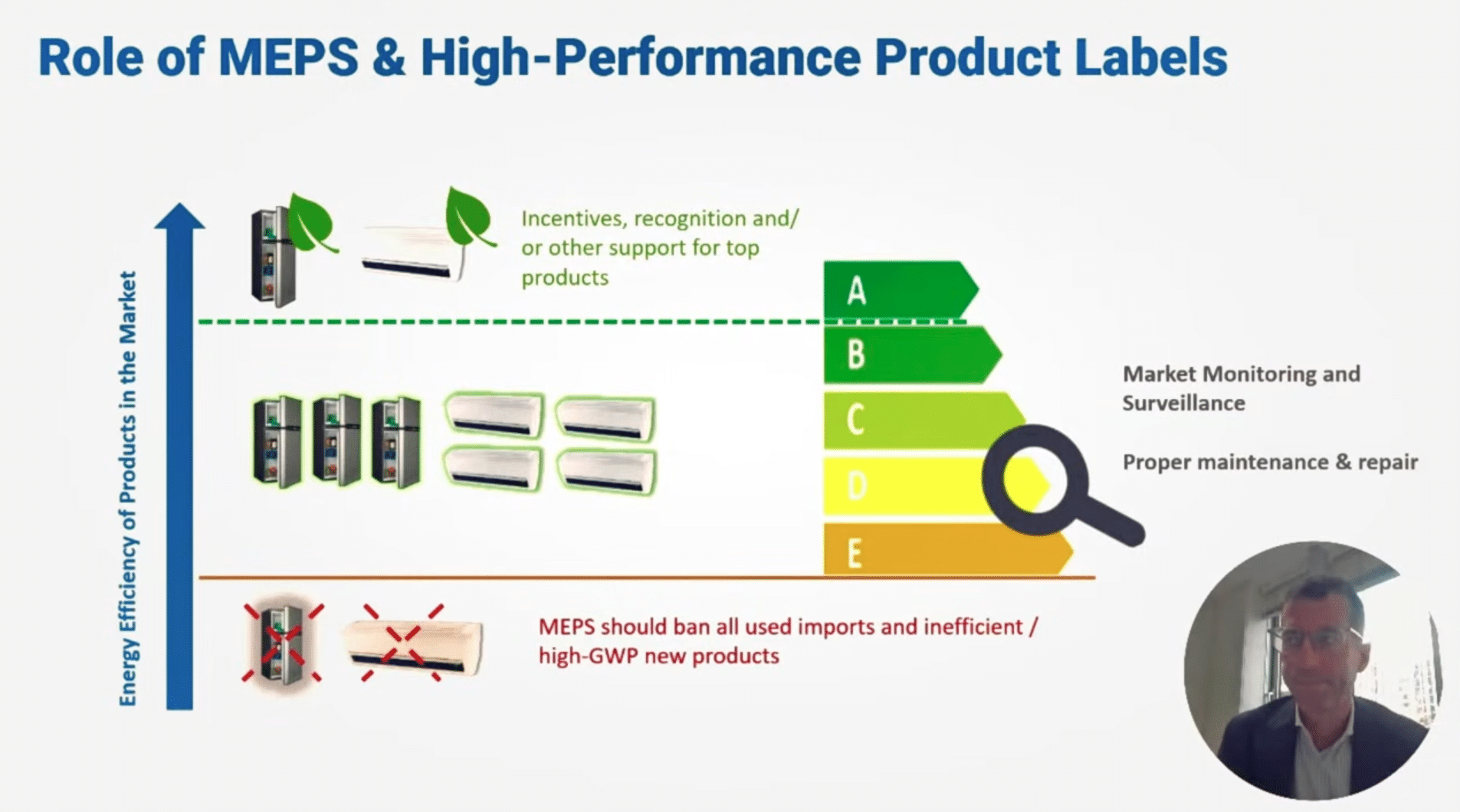
Representing U4E, Patrick Blake showcased how U4E’s global Model Regulation Guidelines and technical tools support regions and countries in adopting and implementing MEPS and labelling programmes. He shared examples of national market-transformation projects where coordinated policy packages have delivered significant energy and emissions savings.
Sophie Attali of the International Energy Agency (IEA) presented new global analysis tracking progress on cooling policy adoption and the gaps that must be addressed to scale sustainable cooling worldwide.
Panel Discussion: Regional Strategies to Accelerate Market Transformation
Moderated by Hubert Zan of the Ghana Energy Commission, the panel brought together representatives from Daikin, TERI, the ASEAN Centre for Energy, and Metrus Energy to discuss practical approaches to advancing efficient, climate-friendly cooling.
Key points included:
- Industry readiness to scale up high-efficiency products and low-GWP refrigerants.
- India’s policy experience, including national cooling plans and regulatory strengthening to support rapid demand growth.
- ASEAN’s Regional Roadmap for Room Air Conditioners, aiming to harmonise MEPS and build national enforcement and testing capacity.
- Financing models that support the adoption of lower-carbon technologies and improve implementation on the ground.
The panel emphasised the need for coordinated regional action, stronger compliance systems, and integrated approaches combining policy, technology, and finance.
The session concluded with closing remarks from Miki Yamanaka of Daikin, who underscored the importance of cross-sector collaboration to deliver sustainable cooling solutions at scale.
The full recording of the event is available on YouTube:

Leave a Reply